
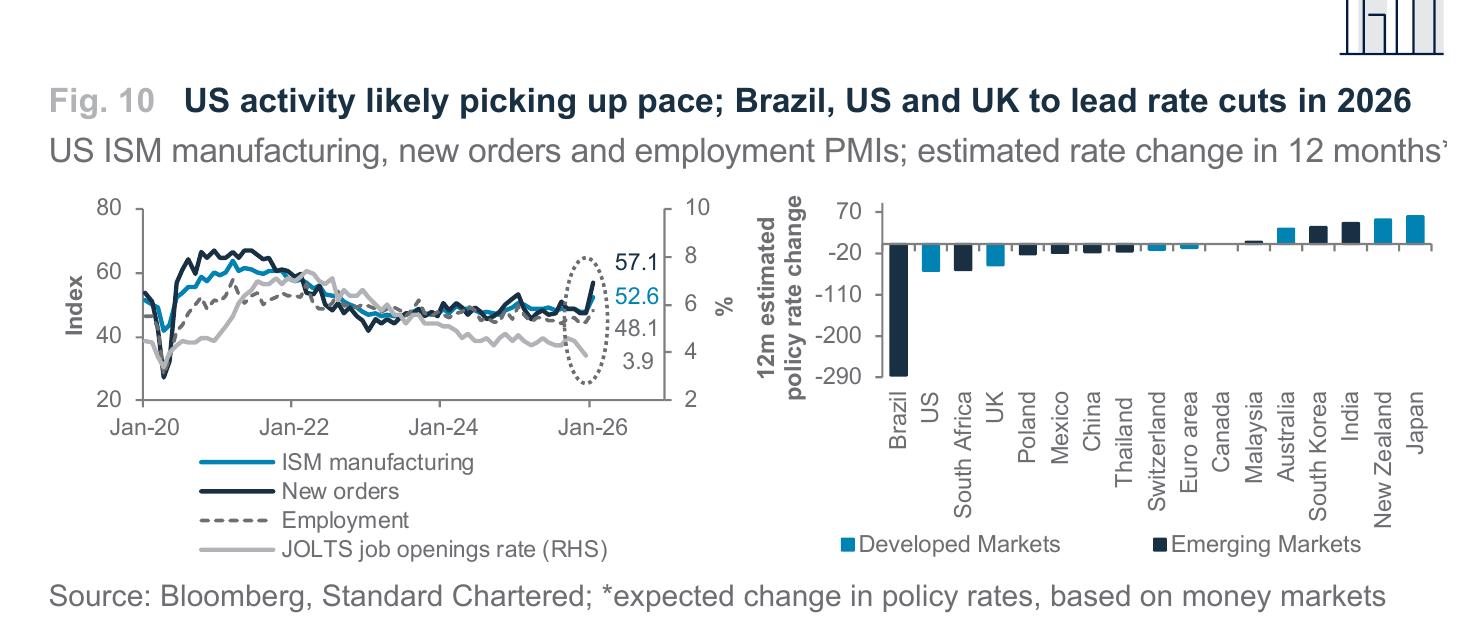
Core scenario (soft landing, 60% probability): We continue to expect an economic soft landing amid fiscal stimulus in the US, Germany and Japan, easing trade tensions and last year's global monetary easing. A solid US jobs report for January has pushed back prospects of a Fed rate cut until proposed Chair Warsh takes over in May. We expect the Fed, under Warsh, to cut rates by 75bps to 3% this year to revive a still-tepid job market as tariff-driven inflation fades. The ECB is likely to hold rates at Downside risk (hard landing, 15% probability): US military action in Iran is a near-term risk. A delay in Fed rate cuts due to elevated inflation could further impair the US job market, triggering a mild recession. A stock market downturn hurting investor confidence or a simultaneous USD-bond and USD sell-off on concerns about US debt and/or Fed independence are other risks. Upside risk (no landing, 25% probability): US tax incentives and deregulation, combined with Fed rate cuts and a potential Supreme Court ruling against tariffs, could revive private sector animal spirits. A Russia-Ukraine peace deal, a US-China grand bargain or EU-wide reforms to establish a Savings and Investments Union each have the potential to boost global growth. US Supreme Court verdict on tariffs; Warsh appointment: due to accelerate in 2026, liting the Euro area growth outlook. The US trade deal has eased uncertainty. Nevertheless, the Court will strike down President Trump's tariffs. While such an outcome would lift business sentiment, bond markets would June 2024, while France's political and fiscal uncertainty remains a key risk. We expect the ECB to stay on hold this reimposes some of the tariffs through other regulations. year as core inflation falls towards its 2% target. Further EUR Meanwhile, we will closely watch Kevin Warsh's Senate confirmation as the next Fed Chair, starting in May, and his outlook on rates and plans to reduce the Fed's balance sheet. China's economic momentum has slowed in recent months, Previously known for his hawkish policy stance, Warsh has dragged by the property sector, which continues to weigh on recently shifted to a more dovish, pragmatic approach. This consumer sentiment. However, its trade balance reached new highs on the back of resilient exports and slowing imports. Fed rates. Warsh believes inflation is temporarily elevated due coming months. Although fiscal stimulus is likely to be front- curb inflation. He views high rates as a barrier to growth and loaded again in 2026, it is likely to be targeted at boosting jobs. However, his dovish stance faces risks if productivity gains fall short and inflation rises. Warsh must persuade other productivity, in line with the government's long-term strategy. Fed policymakers to achieve a majority to back rate cuts.








 原图定位
原图定位