
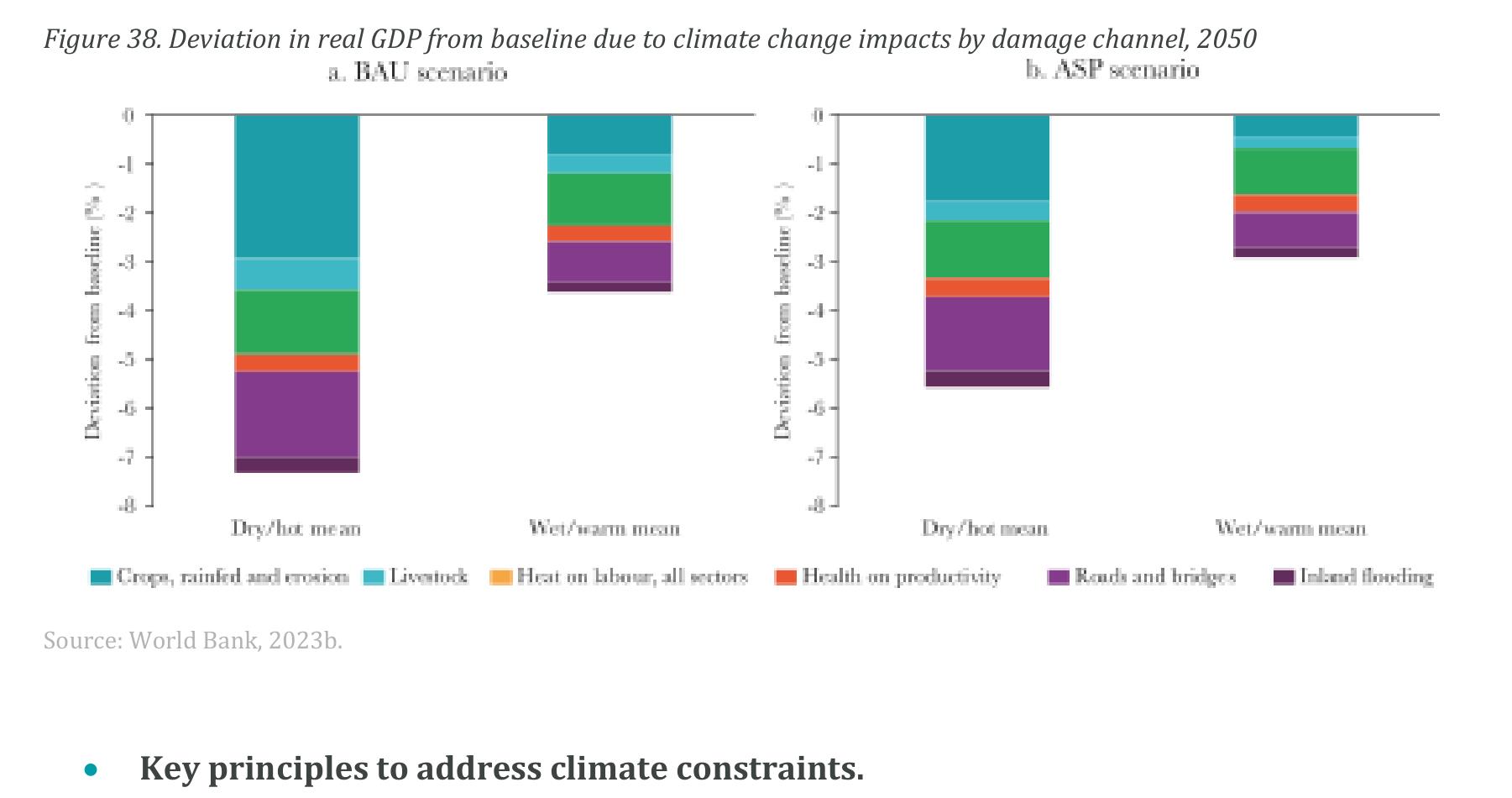
income country in the next decade. Investing in adaptation and resilience to climate change is paramount to achieve water and food security, not undermine labor productivity (across all sectors), and prevent increased infrastructure disruption from climate events (energy, water, transport, digital, housing, etc.). To further reduce the impact of climate change, climate resilience-oriented water, land and forest management, resilient cities, energy, transport and digital systems, basic services (health, education, WASH), and adaptive social protection systems will all require further Kenya faces economic, rather than absolute, water scarcity, as there are water resources it has yet to harness for productive uses. For water security, water, food, and energy systems must transform at a faster pace over the next 30 years than they have over the past 60 years. Addressing its economic water scarcity will require further investment in water storage, conveyance, irrigation, and water supply infrastructure, as set out in the proposed National Irrigation Sector Investment forested lands. Forest degradation and deforestation are the result of illegal encroachment for agricultural expansion, infrastructure extension, and mining, unsustainable fuelwood and charcoal production, uncontrolled livestock grazing, and forest fires. Accelerating the registration of opportunities for communities to engage in sustainable economic activities that use natural assets.


 原图定位
原图定位