
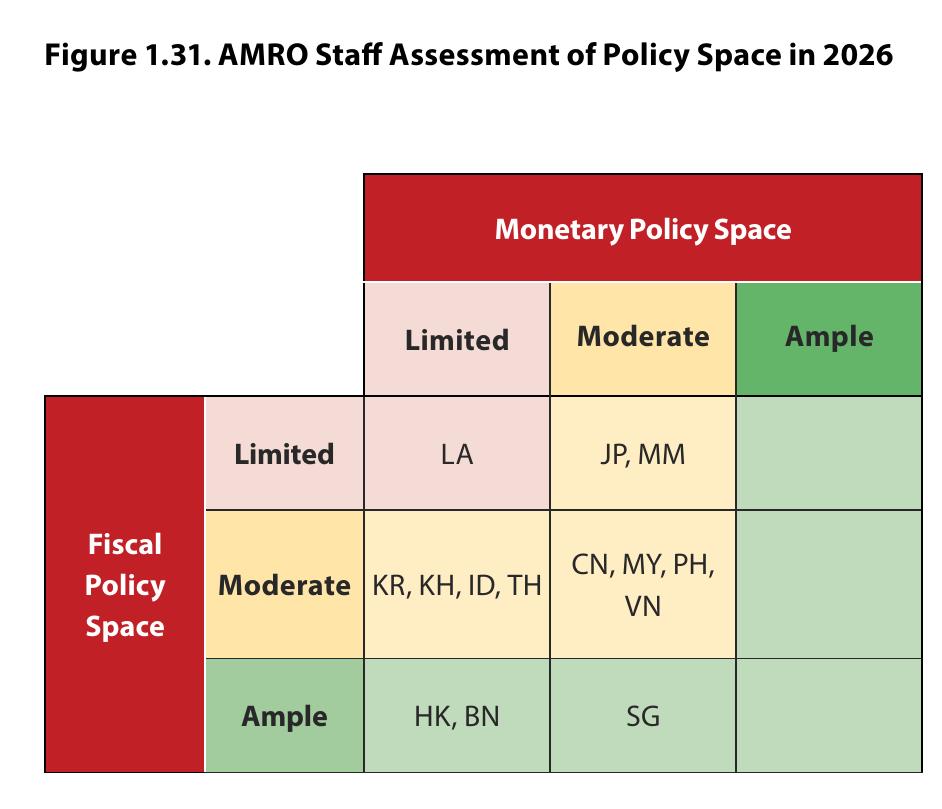
(Percent of potential GDP; percentage point change) Source: Consensus Economics, National authorities via Haver Analytics; AMRO staff Note: Output gap is actual minus potential output over potential output, with potential Space Assessment (Poonpatpibul and others 2020). for many economies in the region. In addition, vulnerabilities structure, currency composition, and investor base - which can increase exposure to exchange rate and refinancing risks, performance was generally strong in most economies. Tax revenue rose across all major categories, reflecting broad-based and resilient economic growth, while non-tax Looking ahead, fiscal policy faces the challenge of revenue increased substantially in Myanmar, driven by dividends from state-owned enterprises, and Vietnam, driven by land-related receipts. Capital expenditure an environment of constrained fiscal capacity. According to the latest budgets, fiscal stance in FY2026 appears objectives, but increases in primary current expenditure exceeded those of capital spending in many economies, fiscal policy. The current period of relatively robust growth recovery, strengthen social welfare systems, and protect vulnerable groups. Several economies introduced or of fiscal consolidation where conditions permit. For pressures, boost domestic consumption, and support the output gap is closing, a more decisive fiscal adjustment low-income groups, while Japan and Korea increased would be appropriate. Where the recovery is more spending through supplementary budgets, and Indonesia fragile, a more gradual and growth-friendly approach would be warranted. In both cases, strengthening fiscal sustainability, including establishing credible fiscal anchors to guide medium- to long-term fiscal aggregates, level of public debt. In many economies, the debt-to-GDP (Box 1.7). This, combined with the rise in global interest rates costs, which in turn is limiting the fiscal space available In parallel, measures on the revenue side should focus on for other priorities, including infrastructure, education, broadening the tax base and improving tax administration, and health. Rebuilding fiscal buffers to create room for and technical spending effciency. Should energy prices







![满足AI推理需求所需的计算资源规模(以吉瓦计)[9]](https://file.sgpjbg.com/FileUpload1/News/2a923cfb-8dea-43d4-9114-4097f1972f49.png "满足AI推理需求所需的计算资源规模(以吉瓦计)[9]")
 原图定位
原图定位