

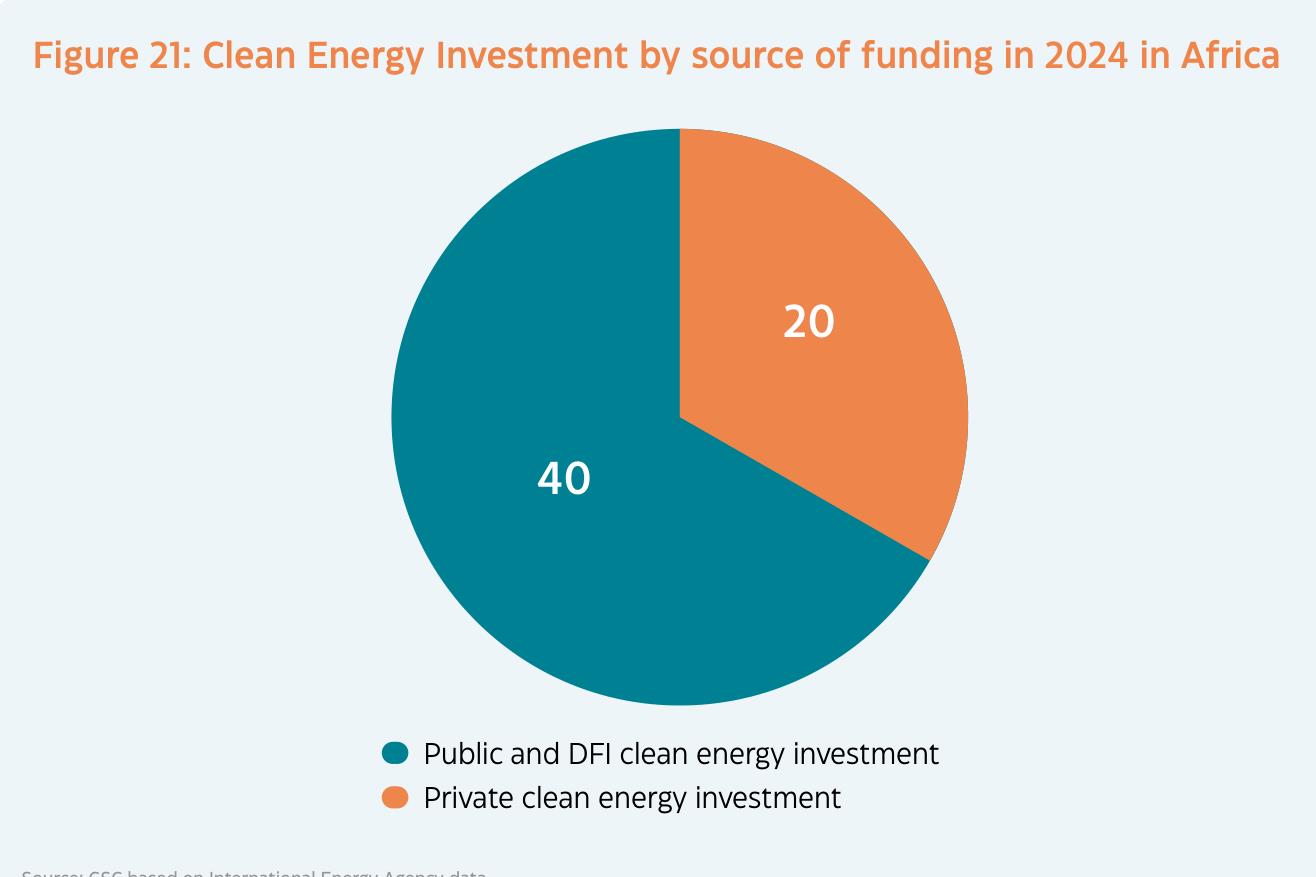
energy transition. In recent years, trade mea- sures for batteries, solar PV, electric vehicles, wind turbines, and electrolyzers have been con- tinuously increasing. By 2024, there were near- funds for developing countries. According tariffs, anti-dumping duties and countervailing Expert Group (IHLEG) on Climate Finance. measures, aiming to localize the clean energy around US$2.44 trillion of investment per year industrial chains. Although these policies partly aim to address external uncertainties, they also them, external finance would need to at least extent, reducing overall production efficiency. vestment and around US$1.3 trillion by 2035. However, the current external financing gap is as high as US$850 billion. To meet this, private pacity and weakened economies of scale, raise finance must increase by 15 to 18 times; mul- the deployment costs of clean technologies, and drag technological progress in key areas, such finance commitments by 3 to 3.8 times; and as batteries and PV, thus delaying global carbon bilateral contributions by 2 to 2.5 times (Ta-


![满足AI推理需求所需的计算资源规模(以吉瓦计)[9]](https://file.sgpjbg.com/FileUpload1/News/2a923cfb-8dea-43d4-9114-4097f1972f49.png "满足AI推理需求所需的计算资源规模(以吉瓦计)[9]")

 原图定位
原图定位